Ethical Issues Stem cell research offers great promise for understanding basic mechanisms of human development and differentiation, as well as the hope for new treatments for diseases such as diabetes, spinal cord injury, Parkinson's disease, and myocardial infarction. However, human stem cell (hSC) research also raises sharp ethical and political controversies. The derivation of pluripotent stem cell lines from oocytes and embryos is filled with disputes about the onset of humans. The reprogramming of somatic cells to produce induced pluripotent stem cells avoids the ethical problems specific to embryonic stem cell research. In any "hSC" research, however, problems arise regarding sensitive downstream research, consent to donate materials for "hSC" research, early clinical trials of "hSC" therapies, and oversight of "hSC" research. These ethical and policy issues need to be discussed along with scientific challenges to ensure that stem cell research is carried out in an ethically appropriate manner. This article provides a critical analysis of these issues and how they are addressed in current policies. (Citation 8)
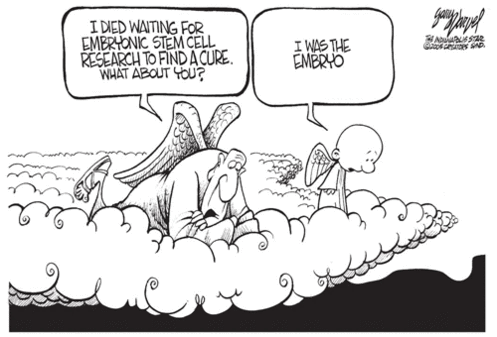 |
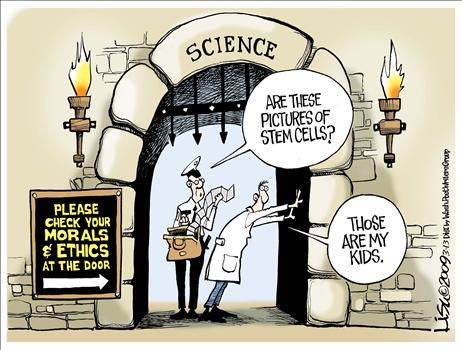 There are many religious groups against the usage of stem cells. Usage of stem cells or even research of stem cells in most countries is illegal and against their religious teaching. An article from American catholic states “Pope John Paul II said embryonic stem-cell research is related to abortion, euthanasia and other attacks on innocent life” In religious based countries they see stem cells as a human embryo being destroyed when in fact stem cells can come from different sources other than the human embryo. |
|
Latest News about Stem Cells |
||
